Schedule a Case with Multiple Physicians
There are various factors to consider when scheduling a case with multiple procedures performed by different physicians, including preference cards, orders, and discharge instructions.
It's important to note that the order in which the physicians/procedures are entered on the HST Practice Management appointment sheet grid affects how the chart, orders, and supplies are configured. The first procedure and physician entered on the appointment sheet grid is considered the primary physician/procedure.

The Chart Template, Physician and Anesthesia Orders, and Discharge Instructions will not merge. The system will only use the Physician Chart Template, Physician and Anesthesia orders, and Discharge Instructions associated with the primary procedure. Because of this, it is best practice to schedule the procedure with the more complex chart needs as the first procedure.
Supplies Used may or may not merge based upon the setting selected in HST eChart Center Configuration (located on the Admin menu).
- If the “Merge” option is selected, the supplies for the cases will be merged in eChart with duplicate items displaying the larger preference card quantity (not the total quantity). For the program to recognize two supply items as the same for merging, the entire supply item row in the preference card must be identical.
- If "Primary Procedure Card Only" is selected, only the supplies from the primary procedure's preference card will display in Supplies Used. See Center Configuration.

HST eChart Required Actions
HST eChart will require the following changes and additions to be manually done once the cases are scheduled in HST Practice Management:
- Enter the Physician’s Orders for the secondary procedure in the Physician Orders BLOC
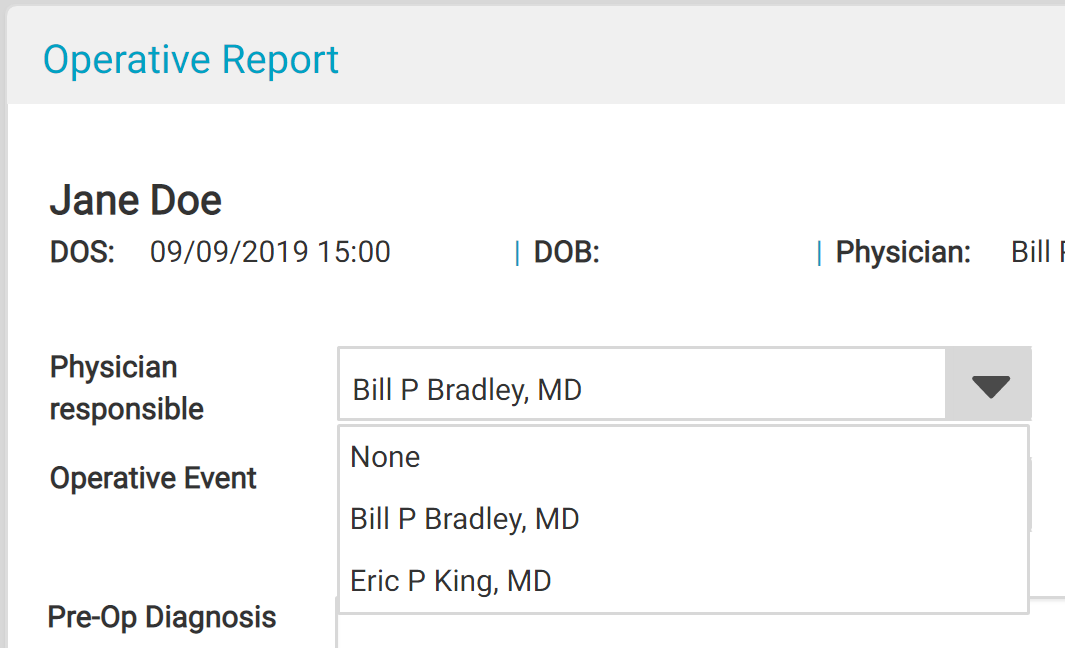
- Add a second Operative Report BLOC 092 to the Physician Workflow and select the secondary physician in the "Physician responsible" drop-down.
- Load any necessary discharge instructions to the Discharge Instructions BLOC 125.
- Add any additional BLOCs that are needed to accommodate the second procedure.